Monday, March 11, 2013

We are all body builders

We tend to blame genetics for a lot of the physical traits that we posess. (the shape of our ears, nose, the color of our hair, bone structure etc.)

The three main body types.


Genetics may make it easier to be one body type than another. Blame your parents. It is still up to you to determine how how look.

One thing we can't blame genetics for is the shape we are in. (What we put in our mouths, how we use our bodies have more to do with how we look)

If I ask you to picture a bodybuilder most of you think of someone like this:


But what if you begin to think about everyone being a body builder?

What I want my clients to focus on is how their bodies work. This is also determined by how you treat the body you are given.

Want to have great posture? Work on it.

Are your legs too weak? Learn how to strengthen them. How strong or weak they are is determined by what you ask your legs to do.

What a lot of people chalk up to getting older has a lot more to do with what kind of body they have built. A lack of exercise will help you build a frail body.
Odds are he didn't work on keeping his fast twitch motor units working.

Exercise can build you a strong body.


What kind of body are you building to handle the challenges of getting older?


It is your body, build it the way you want. Build it for the results you want.


Monday, March 4, 2013

Sarcopenia (and why you should care what it is)


Sarcopenia refers to the loss of skeletal muscle due to aging. (and the lack of proper exercise and diet to maintain this muscle) Why should you care? IMO, Sarcopenia is the main reason our bodies quit functioning like they did when we were younger. This muscle loss (about 1/2 of pound per year) starts in our 20's. You won't notice the effects until you reach your 60's or 70's.

 
The good news is it doesn't have to be debilitating if you work on keeping as much muscle as you can.

You want the fountain of Youth? Do what it takes to keep your muscle mass as you age. This takes work.

The following is an article from Ronenn Rounbenoff, MD, MHS; and Carmen Castaneda, MD, PhD.

SarcopeniamdashUnderstanding the Dynamics of Aging Muscle


Author Information  Ronenn Roubenoff, MD, MHS; Carmen Castaneda, MD, PhD
JED10054
Sarcopenia is not a disease but rather refers specifically to the universal, involuntary decline in lean body mass that occurs with age, primarily due to the loss of skeletal muscle.1 Sarcopenia has important consequences. The loss of lean body mass reduces function, and loss of approximately 40% of lean body mass is fatal.2-5 Sarcopenia is distinct from wastinginvoluntary weight loss due to inadequate intake, which is seen in starvation, advanced cancer, or acquired immunodeficiency syndrome. Sarcopenia also differs from cachexia, a cytokine-driven loss of lean body mass that occurs despite maintenance of weight, which is seen in patients with rheumatoid arthritis, congestive heart failure, or renal failure.6 However, sarcopenia is the backdrop against which the drama of disease is played out: a body already depleted of protein because of aging is less able to withstand the protein catabolism that comes with acute illness or inadequate protein intake.7

Protein stores in humans have at least 2 important functions. First, unlike fat, which is truly stored in the sense that it is in reserve for times of starvation, body proteins are in use as contractile proteins in muscle, antibodies, enzymes, etc. Thus, loss of protein means loss of function. Second, during illness, nitrogen must be mobilized from muscle to provide amino acids to the immune system, liver, and other organs. If adequate nitrogen cannot be provided, either exogenously from diet or endogenously from muscle, the body's capacity to withstand an acute insult declines, andat about 60% of baseline nitrogen throughputthe body ceases to function.2-5 Thus, it is likely that some of the explanation for the poorer outcomes observed with nearly all diseases in older persons relates to their lower body protein stores. Muscle is the major source of protein for functions such as antibody production, wound healing, and white blood cell production during illness. If the body's protein reserves are already depleted by sarcopenia, there is less to mobilize for illness.

The determinants of sarcopenia include genetic and environmental factors,8 with a complex series of poorly understood interactions. Amino acids and proteins are the primary substrates for skeletal muscle mass maintenance. Therefore, knowledge of amino acid kinetics and the balance between protein synthesis and protein breakdown is pivotal to understand how sarcopenia develops. Until now, most studies have indicated that muscle protein synthesis declines with age, suggesting that sarcopenia is due to failure of muscle protein synthesis.9-11

In this issue of THE JOURNAL, Volpi and colleagues12 report findings from the largest reported study to date to examine basal muscle protein synthesis, as well as the first direct measures of protein breakdown and net muscle protein balance in a group of healthy older men. The three-compartment model developed by this group of investigators uses amino acids labeled with stable isotopes to examine the rates of inward and outward transport of amino acids in muscle and to determine the rates of muscle protein synthesis and breakdown and the size of the intracellular free amino acid pool. Contrary to the notion of reduced protein synthesis with age, muscle protein synthesis was slightly higher in healthy older men compared with healthy young men. Basal net protein catabolism was not statistically different between the groups.

These observations strongly suggest that sarcopenia is not due to inadequate basal (fasting) protein synthesis. More likely, aging muscle fails to respond to stimuli that are anabolic to young muscleeg, diet and exerciseperhaps because of hormonal or immunological changes that occur with age and no longer favor anabolism.8 For example, an earlier study by Volpi et al13 suggested that the anabolic response to a mixed glucose-amino acid meal was reduced in older men. Taken together, these 2 studies implicate insulin resistance or immune factors, such as catabolic cytokines or other hormonal or immunological factors, acting primarily in the postprandial state as an important cause of sarcopenia. These observations also suggest that interventions aimed at treating or preventing sarcopenia should maximize the response of muscle to anabolic stimuli, such as diet and exercise, rather than trying to increase basal protein synthesis. Since the latter may be impossible to achieve or require potentially harmful doses of anabolic agents, such as growth hormone, insulin-like growth factor 1, or testosterone, the results of the study by Volpi et al appear to be good news indeed.

However, several limitations of this study should be considered. First, only men were studied, and it is possible that sarcopenia is regulated differently in men and women. Second, these were remarkably lean, healthy older men, and the generalizability of these data to the more typical overweight, sedentary population in many developed countries remains to be determined. For example, if insulin resistance were partly responsible for sarcopenia, then studying lean subjects would tend to bias the results toward the null, as was the case in this study. Third, the major advance of this investigation over earlier studies is the measurement of protein breakdown and synthesis. Yet, this technique is still very new, and it is unknown how sensitive it is to factors such as changes in diet and physical activity. Additional studies would help to clarify whether the increase in basal protein synthetic rate via enhanced entry of amino acids into muscle observed in the older subjects represents the end result rather than the process by which skeletal muscle compensates for the gradual loss of muscle mass.

The study by Volpi et al indicates that sarcopenia cannot be explained by differences in basal rates of muscle protein turnover between young and older men. The authors acknowledge additional work is needed in the older population to determine the individual and combined effects on muscle mass of specific stimuli, such as protein and energy intakes, physical activity, sex hormones, and growth hormone. For the clinician, the most important message is that sarcopenia exists in all older individuals. In the face of acute or chronic illness, maximizing muscle mass and protein stores through adequate nutritional support, aggressive physical therapy, and exercise programs becomes all the more important if muscle function and quality of life are to be preserved in the older population.


Author/Article Information


Author Affiliation: Nutrition, Exercise Physiology, and Sarcopenia Laboratory, Jean Mayer USDA Human Nutrition Research Center on Aging, Tufts University, Boston, Mass.

Corresponding Author and Reprints: Ronenn Roubenoff, MD, MHS, Nutrition, Exercise Physiology, and Sarcopenia Laboratory, Jean Mayer USDA Human Nutrition Research Center on Aging, Tufts University, Boston, MA 02111 (e-mail: Roubenoff@hnrc.tufts.edu).
Editorials represent the opinions of the authors and THE JOURNAL and not those of the American Medical Association.


REFERENCES


1.
Rosenberg I.
Summary comments.
Am J Clin Nutr.
1989;50:1231-1233.

2.
Roubenoff R, Roubenoff RA, Ward L, Stevens MB.
Catabolic effects of high-dose corticosteroids persist despite therapeutic benefit in rheumatoid arthritis.
Am J Clin Nutr.
1990;52:1113-1117.
MEDLINE
3.
Baumgartner R, Koehler K, Gallagher D, et al.
Epidemiology of sarcopenia among the elderly in New Mexico.
Am J Epidemiol.
1998;147:755-763.
MEDLINE
4.
Kotler D, Tierney A, Pierson R.
Magnitude of body cell mass depletion and the timing of death from wasting in AIDS.
Am J Clin Nutr.
1989;50:444-447.
MEDLINE
5.
Winick M.
Hunger DiseaseStudies by Jewish Physicians in the Warsaw Ghetto.
New York, NY: John Wiley & Sons; 1979.

6.
Roubenoff R, Heymsfield S, Kehayias JJ, Cannon JG, Rosenberg IH.
Standardization of nomenclature of body composition in weight loss.
Am J Clin Nutr.
1997;66:192-196.
MEDLINE
7.
Castaneda C, Charnley J, Evans W, Crim M.
Elderly women accommodate to a low-protein diet with losses of body cell mass, muscle function, and immune response.
Am J Clin Nutr.
1995;62:30-39.
MEDLINE
8.
Roubenoff R, Hughes V.
Sarcopenia: current concepts.
J Gerontol.
2000;55:M716-M724.

9.
Yarasheski K, Zachwieja J, Bier D.
Acute effects of resistance exercise on muscle protein synthesis rate in young and elderly men and women.
Am J Physiol.
1993;265:E210-E214.
MEDLINE
10.
Welle S, Thornton C, Josefowicz R, Statt M.
Myofibrillar protein synthesis in young and old men.
Am J Physiol.
1993;264:E693-E698.
MEDLINE
11.
Balagopal P, Rooyackers O, Adey D, Ades P, Nair K.
Effects of aging on in vivo synthesis of skeletal muscle myosin heavy-chain and sarcoplasmic protein in humans.
Am J Physiol.
1997;273:E790-E800.
MEDLINE
12.
Volpi E, Sheffield-Moore M, Rasmussen BB, Wolfe RR.
Basal muscle amino acid kinetics and protein synthesis in healthy young and older men.
JAMA.
2001;286:1206-1212.
ABSTRACT  |  FULL TEXT  |  PDF  |  MEDLINE
13.
Volpi E, Mittendorfer B, Rasmussen B, Wolfe R.
The response of muscle protein anabolism to combined hyperaminoacidemia and glucose-induced hyperinsulinemia is impaired in the elderly.
J Clin Endocrinol Metab.
2000;85:4481-4490.
MEDLINE


Monday, February 25, 2013

Lateral Movements


Those of us who are addicted to exercise tend to focus on our favorite exercises. This can be a good thing if you want to get really good at something it tends to take a lot of practice. I have read that it can take 10,000 attempts to master a movement. (squats, lunges, etc.)


Lateral Lunges aren't easy 


What type of movements do very few people work on? Lateral movements. Why? Because they aren't very easy to perform without a lot of practice. 

Lateral movements on stairs are a great way to prepare for ski season. Just don't look down at your feet while doing them.


Why should you consider adding lateral movements to your routine?

1.  They will add stability and balance to your movements through your hips.

2.  They will help your knees track properly over your toes. This will help alleviate knee pain.

3.  They will increase the range of motion of you hips and that can help alleviate back pain.
 

If you are looking for another way to challenge yourself, consider adding lateral movements to your exercise routine.


Tuesday, February 19, 2013

Stair Climbing for Balance (and Strength too)


The older you get the scarier these get!

Ask older adults about what they fear most about getting older and one of the most common answers you will hear is losing their independence. Ask them what part of their homes in the scariest any many will mention the stairs. I have relatives that live in two story houses that have talked about moving before they get too old to go up and down the stairs.

What can you do to make the stairs a less scary place in your home? You have two ways of approaching the problem.

Will this make your stronger (or WEAKER) around your stairs?


1.  You can accept getting weaker and eventually look for a way to get up and down the stairs with the help of something like a lift. Remember the phrase use it or lose it. Quit using your legs to get up and down the stairs and your legs will lose the ability to help you go up or down the stairs.

2.  You can prepare ahead of time by getting stronger around the stairs.

Anyone that knows me realizes I don't want anyone to settle for option number one unless absolutely necessary. I realize that some people will have to give up their ability to go up and down the stairs under their own power. What can you do to minimize the chance of that happening to you?

Exercise of course!

If you are unstable around the stairs, you should work on your overall strength level (Squat, Lunge, Deadlift, Hip Hinge, etc.) before attempting any of the following exercises.

My favorite exercise to teach clients body control around stairs is call the
Step Down/Step Up.


The up portion

I begin by teaching my clients how to control the step down portion of the movement. 
Stand facing a sturdy step at least 8 inches high.
Step up onto the step with both feet. I spot my clients by standing behind them and having my hands on their hips in case they lose control of the movement.
I have my clients begin using their weaker leg first. Slowly lower one foot back onto the ground focusing on using as much muscle tension on the leg that is still on the step. Repeat on one side until that leg begins to get tired. Rest for a couple of minutes. Repeat with the other side.

If you can't control the down portion of the movement, I recommend facing the kitchen sink. Place your hands on the edge of the sink and use your arms to help control the movement. As you gain strength, you will be able to perform this movement without using the hands.

The goal is to be able to take between 6 and 10 seconds to lower your body down till one leg is touching the floor. As you gain strength, the height of the step can be increased until it is about the length on your lower leg.

Once you have step downs/step ups mastered you can begin working around a staircase. 

Taking Steps Two at a time:

Version #1

Taking the steps two at time while using the same leg to lead:

Start at the bottom of a staircase.

Place the lead foot on the second stair.
Like this except don't use your hands to help.


Lift up using that leg until it is straight and the trailing sides foot is on the same step.
Use this pattern until you reach the top of the stairs.
Take your time going back down the stairs one at a time, alternating legs as usual.

Repeat using the opposite leg as the lead leg until you reach the top of the stairs.

Once you feel that you have mastered these versions, you are ready for the more challenging version.

Alternating the lead legs while taking the steps two at a time.

Begin at the bottom of the stairs.

Place the lead foot on the second stair.

As you use the lead leg to go up the stairs, lift your trail leg until it's foot is on the forth step.

Lift your body using the lead leg and lift your trail leg until it's foot is on the sixth step.

Repeat this sequence until you reach the top of the stairs.

Once you have mastered these you can add more of a challenge by holding weights in your hands by your sides, at chest level and even overhead if your are ready. The higher the weights, the more challenging.


Tuesday, February 12, 2013

What is mobility? (and how do you keep it)


How is this going to increase your mobility when you become dependent on it?
What do you think of when I use the word mobility? I'll bet most people think about scooters.

If you watch enough TV you will see ads for products that are suppose to help keep you mobile. Some of them even highlight that they are free. (Nothing is free) Use it long enough and it will cost you your independence from it.

When I see these ads I think about the phrase use it or loose it. If you get to the point where the only way you can move is to be sitting on this, you aren't going to be getting any stronger. I promise you that you will become weaker the longer you use it.

If you no longer ask your legs to work, they will become weak enough that they won't want to work.

If you would ask me what mobility is my answer would be like this: Mobility is the ability to move your body any way that you ask it to move. It can be trained just like strength and endurance. It can also be lost just like them.

What can you do to keep your mobility? I have covered the basic principles here.
Neck Mobility, Shoulder Mobility, Hip Mobility.

Keeping a basic level of strength will help keep you mobile. Strength is the foundation and without it, your mobility will be challenged.

Combine mobility exercises with strength exercises and you can remain mobile for as long as possible. (and they can help you avoid having to rely on scooters, walkers and wheelchairs)


When I use to visit my father in the nursing home, I would see the residents sitting in their wheelchairs and wonder how many of them didn't need to be there. If only they had worked on the mobility and strength levels in the decades before they ended up there.

What are you doing to make sure you keep your mobility? Losing it can happen to anyone.

 Below is what I am doing.

My four favorite whole body exercises.
#1 Squats

#2 Split Squats

#3 Bent Knee Deadlifts


#4 Straight Legged Deadlifts


Tuesday, February 5, 2013

Eccentric vs Concentric vs Isometric Muscle Contractions

In anatomy 101 you learn that there are three main types of skeletal muscular contractions.

Isometric, Concentric, and Eccentric. I feel that you should train all three if you want to get the most out of your training.
Using Arm curls as an example
Think about climbing stairs. Up the stairs is primarly concentric muscle contractions.
I doubt if he is saying to himself, only 5 more flights on concentric climbing left.
Now think about descending stairs. Make sure you have enough eccentric strength to control your body on the way down. Imagine your body is this truck.
Descending stairs. I sure hope the brakes don't fail.

Take Squatting as another example. As you lower your body you are performing Eccentric work; if you pause anytime during the lift, the muscles being used to hold the position are being used isometrically; as you raise your body you are performing the concentric portion of the lift.

Ask the average person what the purpose of their skeletal muscular system is and you will probably hear answers such as:

To make you move, jump, run, lift things, throw things, etc. This is why most people and trainers focus on training their muscles to make the body move? It is also easier to get an idea of how much work you accomplish during concentric contractions. (Ex. You lifted 100#'s 10 times)

What do these all have in common?

They all involve concentric muscle contractions.Think of concentric contractions as the engine in the body. They determine how the body moves.


What do I think is the most under trained type of muscle contraction?
Eccentric contractions.

Why? When strength training most people focus on how much weight they can lift. They rarely focus on how to control the weight while is is being brought back down to the starting position of the lift. One of the reasons is we don't measure how much work is done during the eccentric parts of a set. (Ex. You spent 45 seconds of that last set on the eccentric portion of the lifting)

Think of eccentric training as teaching the mind how to stop movements. Would you want to drive your car without brakes. Shouldn't you learn how to stop your body when you need to?

In 2010 I was attending the Missouri Strength & Conditioning Seminar at Parkway North. One of the speakers was Dana LeDuc. (the Strength & Conditioning Coach of the St. Louis Rams at the time) During his presentation he mentioned that the rams players used eccentric lifting during leg curls to prevent hamstring injuries. When he was done speaking I got to ask him a question. Where there any other lifts being used eccentrically to prevent injuries? He said no. Too much Eccentric training can slow an athlete down.

If one of the best Strength & Conditioning Coaches in the world doesn't focus much on Eccentric lifting is it any surprise that most people don't?

Why do I feel that you should focus more on the eccentric part of the lift?

1.     It strengthens connective tissue (ligaments and tendons) more than Concentric lifting. Stronger connective tissue is less likely to get injured. I would be willing to bet that if more emphasis was put on the eccentric parts of lifting, there would be a lot less injuries in all levels of sports.

2.     It teaches your mind how to control movements better leading to greater balance and less chance of falling down.

3.     It leads to better change of direction and agility. (athletes focus on this while everyone should.)

4.     It is a great way to get stronger in less time. (More bang for your buck)

What is the biggest risk of Eccentric training? It can make your muscles really sore when too much of it is done.

What type of contractions are being used to control proper posture while lifting/moving? Isometric Contractions. While performing a movement like a squat, isometric contractions stabilize the torso. You wouldn't want your torso moving all over the place while squatting. Even if you think you never perform isometrics, you perform them all the time.
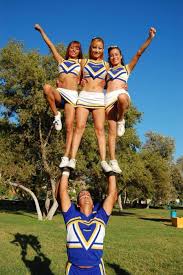
      Imagine the amount of isometric work being done during this picture.
I was watching a performance of my daughter's Cheerleading team on video recently and was amazed at the amount of isometric work being done by the bases and flyers during their stunts.  Getting really strong doing the standing press and overhead squats would pay off the the bases. The flyers could reap huge benefits from working on single foot stability.

Tuesday, January 29, 2013

Farmer' Walks (Loaded Carries) Part 4

Before adding any of these exercises to your loaded carries, you should be able to perform them with the proper technique. 


What can you do once you are comfortable with the basic forms of Farmer's Walks or Loaded Carries?

How about combining them with other exercises like squats, lunges, hip hinges, overhead presses, etc? This will give you a level on conditioning in a very short time that usually would take a lot longer. This is a form of interval training.

Nick has a great article describing a variety of Farmer's Walks

This video is from his Performance U channel on youtube.


Last time I talked about how you can increase the intensity of Farmer's Walks simply by carrying the weights at higher levels. (on the upper chest, shoulders or overhead) The higher, the tougher:

Use about half the weight you can use overhead while walking;

A: Begin walking with the weights held at hip height


B. Walk for 10 - 20 seconds

C. Stop walking

D. Perform a strength training exercise for 8 - 12 reps (Ex, Squats)


E. Walk another 10 - 20 seconds.

F. Stop and perform a different strength training exercise. (Ex. Overhead Presses)


G. Repeat this sequence for a predetermined amount of time (2 - 4 minutes) Pick a different strength exercise each time you stop walking.

Two Legged Straight Legged Deadlift


One Legged Straight Legged Deadlift


Reverse Lunges
 
H. Rest for 2 - 4 minutes.

I. Repeat entire sequence 2 - 4 times.

The only limit you have is your imagination.